Early Evaluation
Orthodontic Evaluation for Children
By examining a child early, we are able to recognize potential problems and correct them before they become more serious. The American Association of Orthodontists recommends that the initial orthodontic evaluation should occur at the first sign of orthodontic problems or no later than age 7. By the age of 7, the first adult molars erupt and establish the back bite. During this time, an orthodontist can evaluate front-to-back and side-to-side tooth relationships. At this age, our doctors can get a clear picture of the dental and jaw development and identify if a problem exists.
Our Treatment Process
From your child's first visit to their final smile, we make every step simple and stress-free.
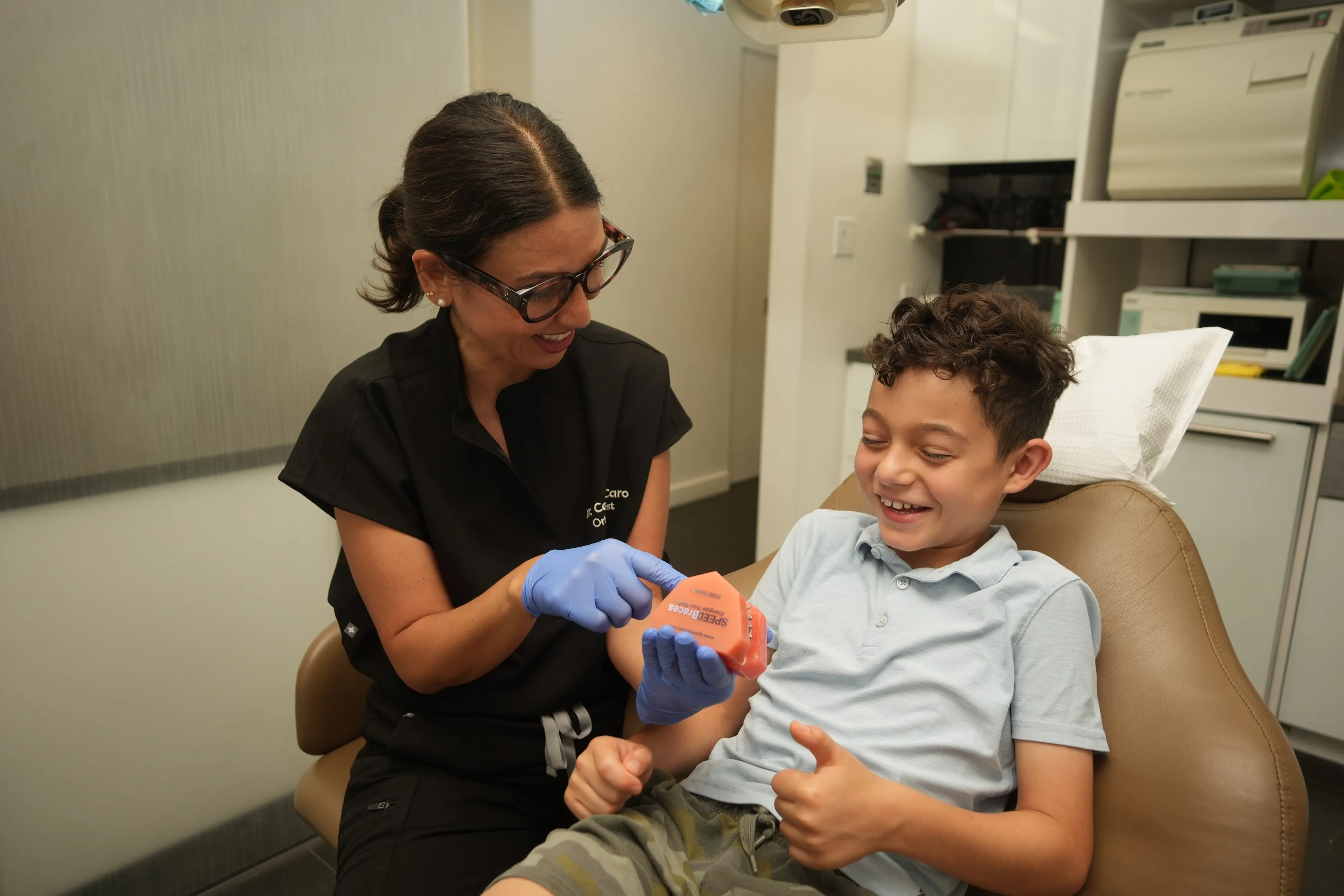
Initial Evaluation
We begin with a thorough exam, including images and photos, to get a clear picture of your child's teeth, jaw, and bite development.
Communication & Education
We walk you and your child through what we find in plain language. If everything looks on track, we'll let you know when to return for a follow-up. If we spot something worth addressing early, we'll explain why and what your options are.
Treatment (As Needed)
Some children benefit from early, limited treatment, like a palate expander or space maintainer, to guide jaw development and create room for adult teeth. This phase is targeted and sets the stage for easier treatment later.
Growth Monitoring
We always make sure to keep up with our patients and track developments over time. When (and if) the right time for treatment arrives, we'll be here for you.
When Should Your Child See an Orthodontist?
Every child develops differently, but the American Association of Orthodontists recommends a first orthodontic evaluation by age 7. By this age, enough adult teeth have come in for us to get a clear picture of how your child's jaw and bite are developing.
Early evaluations don't always lead to early treatment. Many children simply need to be monitored over time, and we'll let you know when the right moment to act arrives.
Signs to Watch For
There are a few things worth mentioning to us early:
Early or late loss of baby teeth
Difficulty chewing or biting
Mouth breathing or snoring
Crowded, misplaced, or blocked teeth
Jaw shifting or clicking
Sucking habits past age 5
Does Early Evaluation Mean Early Treatment?
Not always. If everything looks on track, we'll simply schedule a follow-up to monitor your child's growth. If we do spot something worth addressing, we'll explain exactly what it is and what your options are before any decisions are made.
Reviews from Parents
See what other parents have to say about our care.